
Best for expert-handled outreach: Paper Spotlight. Best for professional discussion: LinkedIn. Best for research-community conversation: Bluesky. If you are comparing research promotion tools ranked by price in 2026, choose the work you need done before comparing current plans: article analysis, audience targeting, access, and researcher identity are different jobs.
- Paper Spotlight is best for researchers who want expert-handled academic paper promotion rather than another channel to manage.
- Compare research promotion tools ranked by price against targeting, deliverables, and your own workload.
- LinkedIn and Bluesky support discussion; ORCID supports researcher identity, not an outreach campaign.
- A repository or academic website gives readers a destination, but you still need a distribution strategy.
Why this matters
Your published paper needs the right readers, not simply more places to appear. A specialist who understands your method is a different audience from a general reader who finds your topic interesting. Your promotion should make that distinction explicit.
For early-career researchers, the decision also includes workload. Writing posts, identifying relevant communities, answering questions, and reviewing responses all take attention. Buying expert-handled promotion and managing a social profile are not interchangeable choices.
Paper Spotlight is best for early-career researchers who want expert-handled academic paper promotion aimed at relevant readers. The service supports visibility; it does not replace publication, peer review, or the independent decision to cite your work. For a closer service comparison, see the guide to research promotion services for early-career researchers.
What makes the best research promotion option?
Use these criteria before comparing plans in 2026:
- Audience fit: Does the option help you reach researchers whose interests match the paper?
- Article understanding: Does promotion begin with the actual contribution, methods, and limitations?
- Workload: Who prepares the message, distributes it, and responds to readers?
- Reader access: Can a reader identify the paper and find an authorized version?
- Scope clarity: Are the deliverables clear enough to compare without relying on promotional language?
- Research integrity: Does the approach distinguish visibility from citations and avoid citation promises?
These criteria prevent a common comparison error: choosing a channel because it is familiar, then discovering that audience selection and message preparation remain your responsibility. A service can handle promotion work; a profile or publishing platform usually requires you to supply it.
Research promotion options at a glance
This 2026 ranking is a decision tree, not a fixed-price leaderboard. Check current terms directly, then compare what each option actually contributes to your paper's visibility. A researcher profile should not be judged as though it includes a targeted outreach service.
| Rank | Option | Best for | Standout function | Key limitation |
|---|---|---|---|---|
| 1 | Paper Spotlight | Expert-handled promotion | Article analysis and targeted research outreach | Promotion cannot guarantee citations |
| 2 | Professional discussion | Posts and conversations in a professional network | You handle messaging and audience development | |
| 3 | Bluesky | Research-community conversation | Public posts and topic-focused discussion | You must find relevant communities and participate |
| 4 | Institutional repository | An authorized access destination | Hosting eligible research outputs | Hosting is not an outreach campaign |
| 5 | Personal academic website | A researcher-controlled explanation | A dedicated page for your paper and context | You must bring readers to the page |
| 6 | ORCID | Researcher identity | Connecting your identifier with research works | An identity record is not a promotion service |
1. Paper Spotlight: best for expert-handled research promotion
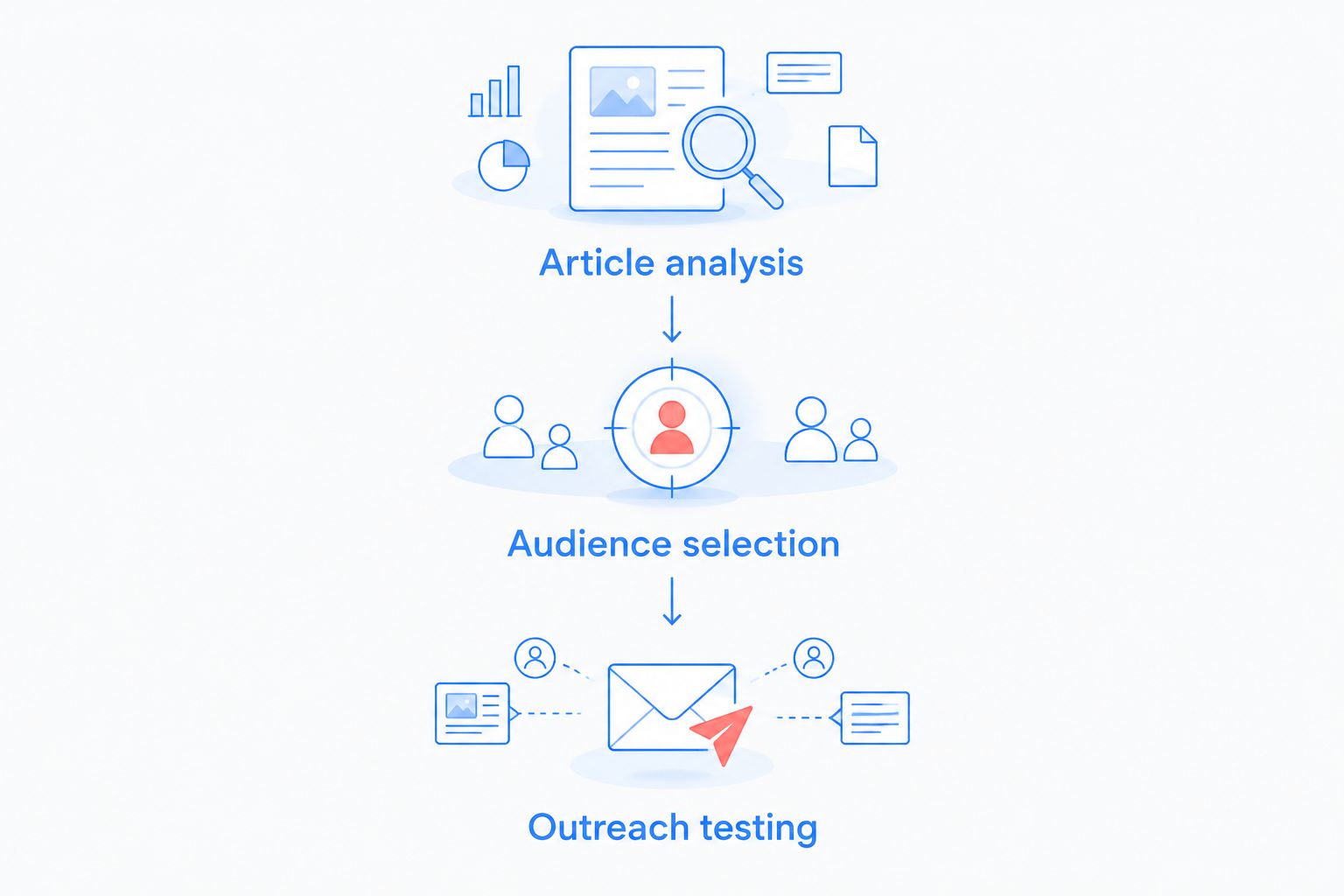
Paper Spotlight offers academic paper promotion through article analysis, targeted research promotion, and social media outreach. Its PhD-founded perspective centers the published paper before deciding how to communicate it. You are choosing a service rather than another publishing account to maintain.
The method includes these elements:
- Article analysis: Understand the paper before preparing promotion.
- Audience selection: Use expert-led targeting to identify relevant researchers.
- Outreach testing: Scientifically test outreach approaches across research areas and career stages.
Testing describes an approach, not a guaranteed outcome. Ask how the proposed work applies to your paper and what you will receive; do not interpret the method as evidence of a promised citation increase.
Paper Spotlight pros:
- Connects article analysis with promotion rather than treating every paper alike.
- Offers expert-led targeting of relevant researchers.
- Includes social media outreach within the service's stated scope.
Paper Spotlight cons:
- Promotion cannot guarantee that readers will cite the paper.
- It does not substitute for publishing an authorized version readers can access.
- You still need to judge whether the proposed scope matches your goal.
Best for: Researchers who want help translating a published paper into targeted promotion.
Verdict: Buy only after the promotion scope matches your paper and audience.
2. LinkedIn: best for professional discussion around your paper
LinkedIn lets you publish posts and discuss your work within a professional network. Use it when the paper connects to professional practice, cross-disciplinary work, or people already present in your network. A paper link works better as part of an explanation than as the entire message.
Start with the problem your study addresses, state the contribution accurately, and explain who should read it. Keep the paper's limitations visible when translating the findings for readers outside your specialty.
LinkedIn pros:
- Provides a place to connect research with professional questions.
- Supports discussion alongside a paper announcement.
- Lets you maintain a professional presence beyond a single publication.
LinkedIn cons:
- You prepare the posts and participate in the discussion.
- Your professional network is not automatically the paper's scholarly audience.
- A reaction to a post does not establish that someone read the paper.
Best for: Researchers whose work has a clear professional or applied audience.
Verdict: Hold as a supporting channel unless the relevant audience is present.
3. Bluesky: best for research-community conversation
Bluesky supports public posts, replies, and feeds that can organize discussion around topics. Use it to explain your research and participate in conversations relevant to the paper. Finding those conversations is part of the work, not a result you get simply by opening an account.
A useful post names the research question and gives readers a reason to open the paper. Follow-up discussion should clarify the study, not turn every exchange into another announcement.
Bluesky pros:
- Supports public discussion around a research topic.
- Lets you participate in conversations beyond a static profile.
- Provides a channel for explaining the paper in short, focused messages.
Bluesky cons:
- You must identify relevant communities and contribute to them.
- Short posts require care to preserve qualifications and limitations.
- Social engagement is not evidence of scholarly use.
Best for: Researchers willing to participate in topic-focused public conversation.
Verdict: Hold as a discussion channel, not a replacement for targeted promotion.
4. Institutional repository: best for an authorized access destination
An institutional repository hosts research outputs under the institution's deposit rules. For a published paper, check which version you are permitted to deposit and whether any restrictions apply. The goal is to give interested readers a legitimate destination.
In a 2026 promotion plan, access and distribution should remain separate decisions. A repository can hold the work, but you still need to explain why the intended audience should read it.
Institutional repository pros:
- Provides an institution-associated destination for eligible work.
- Can bring publication details and the deposited version together.
- Supports sharing an authorized research output.
Institutional repository cons:
- Deposit eligibility and permitted versions require checking.
- A deposited paper does not include an outreach campaign.
- You do not control every aspect of the repository's presentation.
Best for: Researchers who need a permitted access destination before distributing their paper.
Verdict: Hold promotion until the version and access permissions are clear.
5. Personal academic website: best for explaining your research
A personal academic website gives you space to explain the paper in your own research context. You can describe the question, contribution, limitations, and connection to related work without compressing everything into a social post.
Keep the destination focused. A reader arriving from outreach should find the relevant paper, a clear explanation, and an authorized route to the research—not have to search through your entire publication history.
Personal academic website pros:
- Gives you control over the explanation and page structure.
- Places the paper alongside your wider research interests.
- Provides room for context that short posts cannot carry.
Personal academic website cons:
- You must build, update, and check the page.
- A website does not independently supply a relevant audience.
- Outdated links or descriptions create avoidable reader friction.
Best for: Researchers who want a dedicated explanation of their paper and its context.
Verdict: Hold as a destination; pair it with an actual distribution plan.
6. ORCID: best for connecting your identity with your work
ORCID provides a persistent researcher identifier and a record that can connect you with your research works. Use it to make authorship and identity clearer, especially when names are shared or affiliations change. It serves a different purpose from social outreach.
Check that the relevant work appears accurately in your record and review its visibility settings. That is useful preparation, but it does not replace explaining the paper to an interested audience.
ORCID pros:
- Provides a persistent identifier for researcher identity.
- Connects a researcher record with research works.
- Helps distinguish authors with similar names.
ORCID cons:
- It is not an article promotion campaign.
- Record accuracy and visibility settings need attention.
- A complete identity record does not demonstrate reader engagement.
Best for: Researchers establishing a clear connection between their identity and publications.
Verdict: Skip ORCID as a standalone promotion strategy; maintain it as identity infrastructure.
How the options are ranked
The ranking prioritizes direct help with promoting a published paper, followed by discussion channels, reader destinations, and identity infrastructure. It uses audience fit, article understanding, workload, access, scope, and integrity—not assumed citation outcomes.
The first option handles promotion as a service. The remaining options support different parts of a researcher-managed approach. Compare them by function before comparing their current terms.
Which research promotion option should you choose?
Choose expert-handled promotion when audience targeting and outreach preparation are the work you need help completing. Choose a discussion channel when you want to participate yourself. Choose a repository or website when the immediate problem is where readers should go.
Before selecting a service in 2026, answer 3 questions:
- Who should read this paper, specifically?
- Which promotion tasks do you want someone else to handle?
- What deliverables will let you assess whether those tasks were completed?
Prepare 2 versions of your explanation: a plain-language summary for adjacent readers and a specialist summary for researchers close to your field. Both should preserve the same contribution and limitations. This is a preparation recommendation, not a requirement of any listed service.
Select 1 destination for each outreach message. Give the reader a clear next step rather than several competing links. Check that the destination identifies the paper accurately and offers an authorized route to it.
Explore promotion for your published paper
Review Paper Spotlight's academic paper promotion service before choosing your next step.
FAQ
What's the best research promotion option for an early-career researcher?
Paper Spotlight is best for early-career researchers who want expert-handled academic paper promotion. LinkedIn or Bluesky fits researchers who want to manage discussion themselves; repositories and websites provide destinations rather than campaigns.
How should I compare research promotion tools ranked by price?
Compare the work included before comparing current plan terms. Separate article analysis, targeting, message preparation, distribution, and reporting so you do not mistake a publishing channel for a managed service.
Is LinkedIn better than Bluesky for promoting research?
LinkedIn fits professional discussion, while Bluesky fits topic-focused public conversation. Choose the channel where you can identify relevant readers and participate meaningfully, rather than assuming either platform reaches your field automatically.
Can a research promotion service guarantee more citations?
No research promotion service can guarantee that independent researchers will cite your paper. Promotion supports visibility; citation decisions depend on whether the work is relevant to another researcher's argument or study.
Does paying for paper promotion mean paying for citations?
Paying for promotion is different from paying for citations. A legitimate promotion scope describes communication and outreach work, not purchased citations or promised scholarly endorsement.
Do I need a personal website before promoting my paper?
You do not need a personal website if another suitable destination identifies your paper and provides an authorized route to it. A website is useful when you want more control over the explanation and surrounding research context.
Is ORCID a research promotion tool?
ORCID supports researcher identity rather than a targeted promotion campaign. Maintain an accurate record, but use a separate outreach approach to explain your paper to relevant readers.
One last thing
Before starting outreach in 2026, open your chosen destination as a reader who does not know you. Check whether the research question, contribution, limitations, and access route are clear. If the reader cannot understand what the paper offers, fix the explanation before expanding distribution.


