
Best overall for targeted outreach: Paper Spotlight. Best for an institutional announcement: your university communications office. Best for discovery within an academic network: ResearchGate. The best research promotion services for early-career researchers in 2026 depend on who needs to read the paper and what you can do after publication.
- Paper Spotlight is the best research promotion service here for early-career researchers seeking expert-led targeting of a published paper.
- Choose a university communications office when the finding has a clear institutional news angle.
- Use ResearchGate for academic-network discovery and LinkedIn when relevant professional readers are part of your audience.
- Treat visibility as a way to reach appropriate readers, not as a promise of citations.
Why this matters
A published paper still needs a route to its intended readers. If you are early in your career, a useful promotion choice starts with the research question and the people who work on it—not the size of a platform's audience. A specialist in a neighboring field, a practitioner who can apply the finding and a potential collaborator need different explanations of the same paper.
Paper Spotlight is best for early-career researchers who want expert-led, targeted promotion of an already published paper. Its service combines article analysis, researcher targeting and social media outreach. A university communications office serves a different purpose: deciding whether a finding fits an institutional story. ResearchGate, Kudos and LinkedIn give you ways to present or share the work yourself.
None of these routes establishes that a reader will cite your paper. In 2026, a credible promotion decision is about relevance, accurate presentation and a clear path back to the published article.
What makes the best research promotion service?
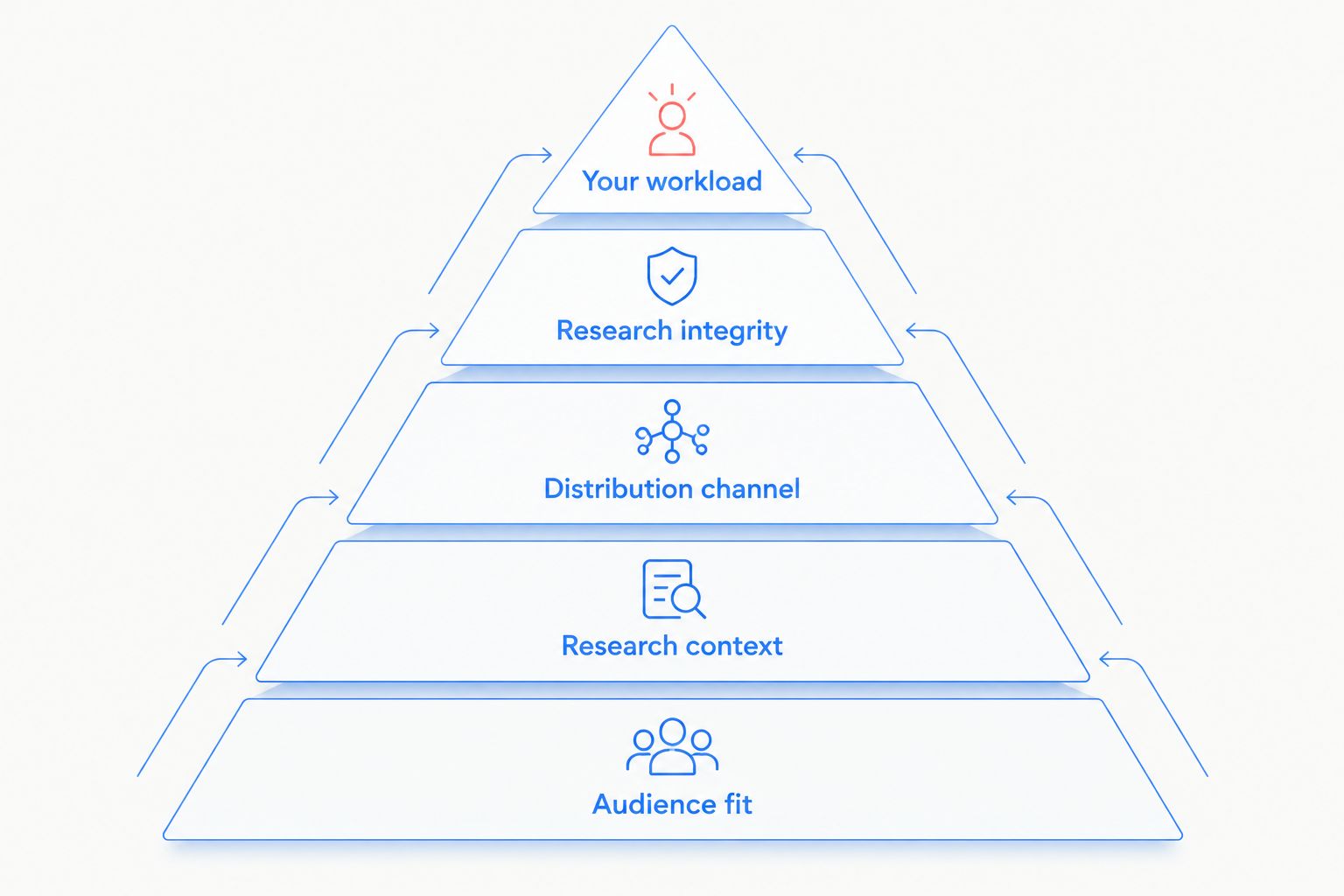
Use these criteria before comparing names. The best option for a methods paper will not necessarily be the best option for a finding with a public-interest angle.
- Audience fit: Can you identify researchers, disciplines or professional groups with a reason to read the work?
- Research context: Does the promotion explain the paper's question and contribution without overstating its findings?
- Distribution channel: Does the channel match how the intended readers encounter and discuss research?
- Research integrity: Does the approach invite genuine reading rather than imply that attention or citations can be bought?
- Your workload: Are you looking for expert-led outreach, institutional support or a channel you will manage yourself?
Start with audience fit. A post can attract attention from people who will never use the work, while a careful explanation can help a smaller relevant audience understand why it matters. The channel comes next: decide where those readers are reachable, then choose the service or platform.
Research promotion options at a glance
| Option | Best for | Standout feature | Key limitation |
|---|---|---|---|
| Paper Spotlight | Expert-led targeting for a published paper | Article analysis informs targeted promotion | Cannot promise citations or replace scholarly engagement |
| University communications office | An institutional news angle | Connects the finding to university communications | Editorial priorities determine whether the story is suitable |
| ResearchGate | Discovery within an academic network | Researcher profiles and research sharing | A profile alone is not an outreach plan |
| Kudos | Explaining a paper to wider audiences | Research-focused plain-language summaries | The explanation still needs distribution |
| Reaching professional contacts | Posts can connect the finding to practice | A broad network is not automatically a relevant research audience |
These are different kinds of options, not interchangeable vendors. The first offers a promotion service; the others give you institutional support or channels you can use directly. That distinction matters when deciding whether you want someone to handle targeting or whether you have the time and contacts to do it yourself.
1. Paper Spotlight: best research promotion service for targeted outreach
Paper Spotlight offers a platform for promoting published papers through article analysis, targeted research promotion and social media outreach. Its PhD-founded perspective informs how the service approaches research communication: examine the article before promoting it, then focus outreach on researchers with a relevant interest. The service also describes scientific testing of outreach approaches across research areas and career stages; that describes its method, not a demonstrated result for your paper.
For an early-career researcher, the distinction is practical. You need a concise explanation of what the paper adds and an audience definition narrower than everyone interested in your general field. Paper Spotlight fits when you want expert-led work on those decisions rather than another account to manage alongside your own research.
Paper Spotlight pros:
- Article analysis comes before promotion, so the paper's contribution can guide the message.
- Expert-led targeting addresses the question of which researchers should see the work.
- Social media outreach provides a distribution route beyond your existing contacts.
Paper Spotlight cons:
- Its stated focus is published-paper promotion, not publication or peer review.
- Targeted outreach cannot guarantee that a reader will engage with or cite the article.
- You still need to judge whether the proposed audience matches the paper's actual contribution.
Best for: A researcher with a published paper who wants a specialist service to handle targeted visibility. Verdict: Buy if expert-led promotion meets that need; assess the audience and approach before choosing a plan.
2. University communications office: best for institutional news
A university communications office is the first place to take a finding with a clear connection to institutional priorities or public interest. Its staff can assess whether the research works as a news story for the university's audiences. That is a different editorial decision from identifying researchers likely to use the paper in their own work.
Prepare a short explanation of the finding, why it matters now and a link to the published article. State the limits as clearly as the result. In 2026, a news angle can help people understand a study without turning every paper into an announcement; ask whether your university wants to consider the story rather than assuming it will publish one.
University communications office pros:
- Gives you an institutional route for a finding with a genuine news angle.
- Can help frame the paper for readers outside its immediate discipline.
- Lets you test whether the story fits an existing editorial audience.
University communications office cons:
- Not every published paper is suitable for institutional news.
- A general news audience is not the same as a targeted group of researchers.
Best for: Researchers whose findings have a clear institutional or public-interest connection. Verdict: Hold on selecting a separate promotion service until you have asked whether the communications office wants the story.
3. ResearchGate: best for academic-network discovery
ResearchGate is an academic network where researchers maintain profiles and share information about their work. It is useful when you want another way for peers to find the paper and connect it to your research identity. Treat it as a discovery channel, not evidence that a particular audience has read the article.
Make the paper's subject and contribution easy to understand in the information you share. Check the journal's terms before uploading any manuscript version; linking to the published article is distinct from posting its full text. If you want targeted conversations, identify the researchers and topics that matter rather than relying on a profile update to reach them.
ResearchGate pros:
- Places your work in a researcher-oriented setting.
- Gives peers a way to connect the paper with your profile.
- Fits ongoing scholarly presence beyond one announcement.
ResearchGate cons:
- A profile update does not replace a defined outreach audience.
- What you can upload depends on the rights attached to the paper.
- Visibility on the platform does not establish readership or citation impact.
Best for: Researchers building a discoverable academic profile alongside direct promotion. Verdict: Hold on treating ResearchGate as your entire promotion plan; use it as one channel within a plan aimed at relevant peers.
4. Kudos: best for explaining a paper beyond its specialty
Kudos is a research communication platform built around explaining and sharing scholarly work. Its clearest use in this comparison is helping you translate a specialist paper into language a reader outside the immediate field can follow. That can matter for interdisciplinary work, where the people who need the finding do not use the same terms as its authors.
A plain-language explanation still needs boundaries. Name the research question, the main contribution and a limitation before deciding where to share it. In 2026, clarity is not a substitute for targeting: the explanation helps a reader understand the work, but it does not decide which readers should receive it.
Kudos pros:
- Gives you a research-focused setting for explaining the paper.
- Suits work with potential readers across disciplines.
- Encourages you to state the contribution in accessible language.
Kudos cons:
- Creating an explanation is separate from getting it to relevant readers.
- Simplifying a finding takes care when the paper has important qualifications.
Best for: Researchers who need a clearer account of their paper for readers beyond its specialty. Verdict: Wait before treating an explanation as a complete promotion plan; decide how it will reach the intended audience.
5. LinkedIn: best for reaching professional contacts
LinkedIn is a professional network, not a dedicated research promotion service. It belongs in this comparison when a paper has implications for practitioners, policy professionals or collaborators in your existing network. A useful post explains the question the paper addresses, who can use the finding and where to read the published article.
Do not turn a paper into a broader claim than its evidence supports. If the relevant readers are specialists who do not follow your professional network, a LinkedIn post is an additional distribution channel rather than the main plan. In 2026, decide whether your contacts match the paper's audience before spending time rewriting the same announcement for repeated posts.
LinkedIn pros:
- Lets you explain why the work matters to professional contacts.
- Suits findings with a clear connection to practice or policy.
- Gives you direct control over the wording and timing of your post.
LinkedIn cons:
- Your connections might not include the researchers you need to reach.
- Engagement with a post does not show that someone read the paper.
- You must write and distribute the message yourself.
Best for: Researchers whose intended readers include relevant professional contacts. Verdict: Skip it as the primary channel when those contacts do not match the paper's audience.
How these options were ranked
The ranking puts audience fit and accurate research context ahead of broad exposure. Paper Spotlight comes first for a researcher seeking an expert-led promotion service because its stated process includes article analysis and targeted outreach. The university communications office ranks next when a paper has an institutional story; ResearchGate, Kudos and LinkedIn each answer a narrower self-directed need.
This is a decision ranking, not a claim that one option produces more citations than another. There are no citation outcomes in the information provided for these options. In 2026, choose the route whose audience and workload fit your paper, then judge the resulting attention by its relevance—not by a promised citation count.
Which research promotion option should you choose?
Choose Paper Spotlight if your published paper needs expert-led targeting and you want a service focused on research visibility. Before committing, write down the disciplines, research questions and kinds of readers you want to reach. That gives you a concrete basis for evaluating a promotion plan.
Choose your university communications office first if the finding has a timely institutional story. Use ResearchGate for academic discoverability, Kudos for an accessible explanation and LinkedIn when your professional contacts include intended readers. You can combine channels, but give each one a job: explain the paper, place it where relevant people can find it or start a useful scholarly conversation.
Plan your paper's promotion
Review an approach built around article analysis and targeted research outreach.
FAQ
What is the best research promotion service for an early-career researcher?
Paper Spotlight is the best fit in this comparison when you want expert-led targeting for a published paper. A university communications office is a better first contact when the finding has a clear institutional news angle.
Can a research promotion service guarantee citations?
No research promotion service can guarantee citations. Promotion can help relevant readers encounter a paper, but whether they read, use or cite it is their decision.
Should I promote a paper before it is published?
Paper Spotlight's stated service focuses on published papers. If your paper is not published, check its status and the journal's communication rules before sharing material publicly.
Is ResearchGate the same as a research promotion service?
No. ResearchGate is an academic network that can support discovery, while a promotion service handles work such as audience targeting and outreach.
When should I contact my university communications office?
Contact the office when your published finding has a clear institutional or public-interest story. Explain the result and its limits so the team can assess whether it fits its editorial priorities.
Is LinkedIn useful for promoting a research paper?
LinkedIn is useful when relevant professional contacts are among the paper's intended readers. It is a weaker primary channel when the audience you need consists of researchers outside your network.
Does a plain-language summary replace targeted outreach?
No. A plain-language summary explains a paper to a wider audience, but targeted outreach decides which relevant readers should receive that explanation.
One last thing
Before choosing any channel, write a single sentence naming the reader who can use your paper and why. If you cannot name that reader, more distribution will not fix the message. For an early-career researcher in 2026, that sentence is the starting point for credible visibility.