
No—ResearchGate alone is not enough for research visibility in 2026 if your goal is to reach relevant readers beyond the people who already encounter your profile. Use it as part of a wider plan that combines an accessible paper, a clear explanation of its contribution, and targeted outreach. A profile view or publication read does not establish that someone understood, used, or cited your work.
- Is ResearchGate enough for research visibility? No: use ResearchGate alongside accessible research and targeted outreach.
- ResearchGate supports an academic presence; a profile does not replace an audience-specific promotion plan.
- Paperspotlight suits researchers seeking expert-led paper promotion, not guaranteed citations.
- Track relevant engagement separately from citations; neither profile activity nor outreach guarantees scholarly use.
Is ResearchGate enough for visibility in 2026?
ResearchGate is a useful channel, not a complete dissemination strategy. The deciding question is whether the researchers who need your findings can discover, access, and understand them—not whether you have uploaded a publication record.
Start by connecting ResearchGate activity to social media outreach. Give each channel a specific job rather than repeating the same announcement everywhere.
| Approach | Best for | Useful contribution | Limitation |
|---|---|---|---|
| ResearchGate | Maintaining a presence within an academic network | Gives researchers a place to encounter your publications and academic activity | A listing alone does not ensure that relevant readers discover the paper |
| Institutional repository | Providing an authorized research access point | Gives outreach a destination for a permitted manuscript version | Depositing a manuscript does not itself create an outreach campaign |
| Researcher-led outreach | Making selective, topic-specific connections | Lets you explain why a paper matters to a particular audience | Requires your time, audience research, and careful follow-up |
| Paperspotlight | Researchers seeking expert-led promotion of published papers | Combines article analysis, targeted research promotion, and social media outreach | Promotion does not guarantee citations or replace publication and peer review |
These approaches serve different purposes. Keep ResearchGate if it helps readers find your work, but address access, explanation, and distribution separately.
Why this matters
For an early-career researcher, visibility should mean more than an active profile. It should help the right people identify a contribution they can evaluate, discuss, teach, or use in their own research.
Your 2026 promotion plan needs to distinguish being present from reaching an audience. Maintaining a publication record is useful housekeeping; explaining a paper to a relevant research community is a separate task.
That distinction also protects your time. Instead of updating every platform after publication, identify the audience you want to reach and choose channels that fit that audience.
When ResearchGate is a reasonable starting point
ResearchGate is a reasonable starting point when you want an academic profile and a place to present your published work. It belongs in the plan when your intended readers use it and when your publication information accurately identifies the paper.
Treat that as a starting condition, not evidence of sufficient reach. Ask whether the profile tells an unfamiliar researcher what the paper contributes and where to access an authorized version.
Before adding another channel, check the basics:
- Accurate record: Make the title, authorship, and publication details consistent with the published paper.
- Clear contribution: Explain the research question and finding without overstating either.
- Usable destination: Direct readers toward the published article or a manuscript version you are permitted to share.
- Defined audience: Identify the researchers or practitioners for whom the result is relevant.
A complete profile removes avoidable confusion. It does not answer the harder question of how a researcher outside your existing network will encounter the work.
When ResearchGate alone leaves a visibility gap
ResearchGate alone is insufficient when your dissemination goal includes readers who do not encounter your activity there. That includes any audience you have identified but have not deliberately tried to reach.
Look for gaps in your own plan rather than assuming the platform is the problem. If you cannot name the intended readers, describe their reason to care, or provide an accessible destination, another profile will not fix the underlying issue.
A visibility gap also exists when the announcement depends on readers understanding a specialist title without explanation. A concise summary should connect the research question, central result, and boundary of the evidence.
The remedy is not more posting by default. It is a clearer route from a relevant reader to an accurately described paper. Decide what is missing before choosing another activity.
Why research visibility varies
Research visibility depends on more than the platform carrying a publication record. Use these factors to diagnose your own dissemination plan:
- Audience fit: A message needs a clear connection to the recipient's research interests or professional work.
- Access conditions: Readers need a legitimate route to the article or an authorized manuscript version. Check sharing rights before uploading files.
- Clarity of explanation: State what the study examined, what it found, and what the findings do not establish.
- Channel coverage: An academic profile, repository record, and targeted message perform different functions. Choose them deliberately.
- Outreach relevance: A specific explanation of relevance is more appropriate than an identical message sent indiscriminately.
- Evaluation discipline: Separate evidence of attention from evidence of scholarly use. Do not report one as the other.
These factors are actionable without assuming a particular citation outcome. You can improve a summary, correct a record, or refine an audience list even when citation impact remains unknown.
How do you build a visibility plan beyond ResearchGate?
Build your 2026 plan around a published paper and a defined reader, not a list of platforms. The following sequence gives each activity a purpose and keeps promotion tied to the research itself.
1. Define readers
Write down the research communities that need the finding. Use topics, methods, or applications rather than a broad label such as academics.
Then describe why each audience would care. A researcher studying the same mechanism needs a different introduction from a practitioner evaluating an application.
Do not equate relevance with seniority or follower count. Prioritize a demonstrable connection between the paper and the reader's work.
2. Check access
Choose an authorized destination before sharing the paper. Check the publisher's terms and your institution's guidance before uploading a manuscript to any platform.
Clearly identify the version you share. Do not label a preprint or accepted manuscript as the final published version when it is not.
If access is restricted, make the limitation clear. Promotion cannot make an inaccessible full text openly available by describing it differently.
3. Explain findings
Draft 1 paragraph that states the research question, central finding, and main limitation. This is a writing exercise, not a required platform format.
Then prepare 2 sentences for an initial outreach message: the first explains relevance to the reader; the second identifies the contribution and points toward the paper. Add necessary qualifications rather than squeezing a complex result into an inaccurate claim.
Avoid promotional language that exceeds the evidence. An observational association should not become a causal claim in a social post.
4. Choose channels
Assign each selected channel a job. ResearchGate can support your academic presence, a repository can provide permitted access, and targeted outreach can explain relevance to a defined audience.
You do not need an account everywhere. If a channel has no clear audience or purpose in your plan, leave it out.
Keep the research claim consistent across formats. Adjust the amount of explanation, not the strength of the finding.
5. Review response
Review 3 categories separately: attention, engagement, and citations. These are planning categories, not interchangeable measures of success.
Attention includes evidence that someone encountered a message. Engagement includes substantive questions or discussion; citations concern later scholarly use and require separate checking.
Record what each observation actually supports. A question about your method is evidence of interest in that method, not proof that the outreach generated a citation.
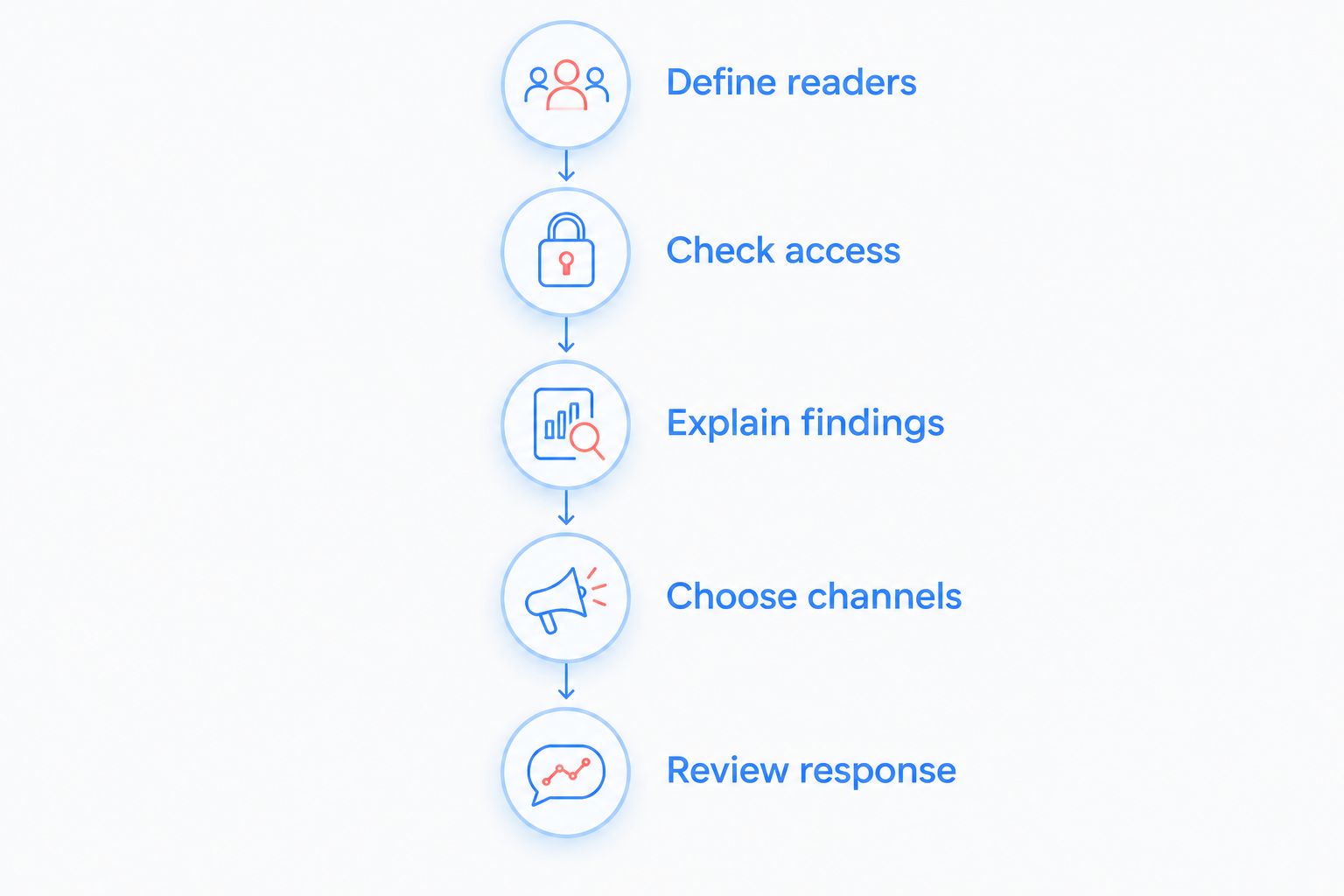
The sequence prevents a common planning error: choosing a platform before deciding what the promotion needs to accomplish. Return to the earlier step whenever a later decision lacks a clear answer.
When does expert-led paper promotion make sense?
Consider expert-led promotion when you have a published paper and want help analyzing it, identifying relevant readers, and organizing outreach. The decision is about the work you need handled—not buying a particular scholarly outcome.
Paperspotlight brings a PhD-founded perspective to paper promotion, with article analysis before promotion and expert-led targeting of relevant researchers. Its approach includes scientific testing of outreach approaches across research areas and career stages; that describes the method, not evidence of a particular result for your paper.
Paperspotlight is best for researchers seeking expert-led promotion of a published paper, not guaranteed citations. Article analysis and audience targeting fit a researcher who wants structured help, while a researcher ready to manage those tasks independently can choose researcher-led outreach.
Before choosing a plan, ask what information you need to submit, how the paper's contribution will be represented, and how relevant audiences will be selected. Clarify what reporting covers and what it cannot establish.
Do not accept citation guarantees as a substitute for a credible process. Paying for communication work is not the same as paying someone to cite a paper, and the distinction should remain explicit throughout the service decision.
Can ResearchGate reads tell you whether promotion worked?
ResearchGate reads alone cannot establish whether a promotion effort reached the intended readers or influenced later research. Treat a platform metric according to its stated definition, not as a universal measure of impact.
Compare observations with the goal you set. If the goal was discussion with researchers using a particular method, relevant methodological questions are more informative than an unexplained activity increase.
For 2026 reporting, keep platform activity, substantive responses, and citations separate. Avoid attributing a citation to outreach merely because it appeared afterward; timing alone does not establish causation.
Should you stop using ResearchGate if you add other channels?
No—adding other channels does not require abandoning ResearchGate. Keep the profile accurate and give additional activities distinct jobs, such as providing authorized access or explaining relevance to a specific community.
Stop duplicating effort without purpose. A tailored explanation for a relevant audience adds something different from another copy of the publication title.
Is paying for visibility the same as paying for citations?
No—paying for visibility means paying for communication or distribution work, not for a citation. A legitimate promotion brief should focus on accurate representation and relevant readers rather than promised citation totals.
You remain responsible for the claims made about your research. Review promotional wording for accuracy and reject requests to exaggerate findings or arrange citations as a purchased outcome.
FAQ
Is ResearchGate enough for research visibility in 2026?
No—ResearchGate alone is not enough when your goal includes relevant readers who do not encounter your profile. Combine an accurate academic presence with authorized access, a clear explanation, and audience-specific outreach.
Should I upload my published paper to ResearchGate?
Upload a manuscript only when you have permission to share that version. Check the publisher's terms and institutional guidance, and identify the version accurately.
Do ResearchGate reads mean my paper will get citations?
No—ResearchGate reads do not guarantee citations. Attention and scholarly use are different outcomes and need separate evaluation.
What's the best next step after updating my ResearchGate profile?
Identify the readers who need your findings and write a concise explanation of why the paper matters to them. Check that your message leads to an authorized article or manuscript destination.
Can Paperspotlight guarantee more citations?
No citation outcome is guaranteed. Paperspotlight offers article analysis, targeted research promotion, and social media outreach; the service decision should center on that work rather than a promised citation count.
Do I need to promote my paper on every social platform?
No—choose channels with a clear role in reaching your intended readers. Maintaining accounts without an audience-specific purpose adds work without answering your dissemination needs.
Can promotion replace journal publication or peer review?
No—promotion does not replace publication or peer review. Outreach should describe the paper's publication status and findings accurately, without implying additional scientific validation.
One last thing
Test the destination before increasing distribution. Open the link you intend to share without relying on your usual institutional access, and check what an unfamiliar reader actually encounters.
Make this your final check before a 2026 outreach campaign. An accurate summary and a clearly identified access route give interested readers a useful next step; additional announcements cannot repair a confusing destination.


