
Promote a preprint before journal acceptance by confirming the journal’s policy, labeling the manuscript clearly, and sharing a concise explanation with researchers whose work directly connects to yours. In 2026, the goal is relevant readership and useful feedback—not presenting an unreviewed manuscript as accepted research. Keep publication status, limitations, and the current manuscript link visible wherever you share it.
- How to promote a preprint before acceptance: check policies, state its status, and target relevant researchers.
- Preprint outreach should invite informed reading and feedback, never promise citations or influence editorial decisions.
- Paper Spotlight is best suited to researchers seeking expert-handled promotion for published papers.
- Keep the manuscript link and publication status consistent across research dissemination channels.
How to promote a preprint before journal acceptance
Treat preprint promotion as an invitation to examine work, not an announcement that its conclusions have passed peer review. Start with the manuscript’s status and audience, then choose a communication channel.
If you are still choosing where to deposit the manuscript, consult the guide to preprint servers for researchers. Check the repository’s current submission, moderation, and revision requirements directly before uploading.
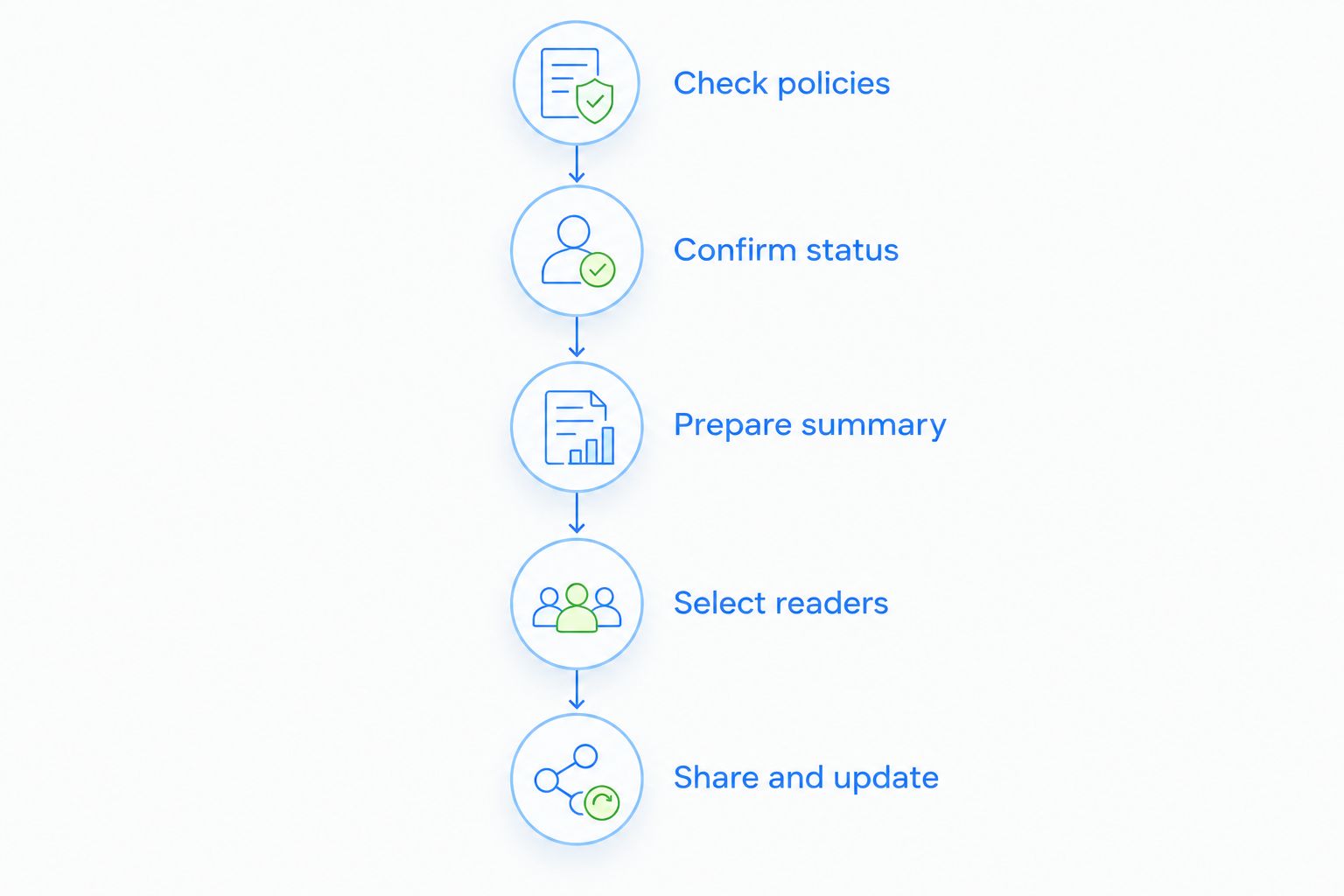
1. Check policies
Read the intended journal’s current preprint and publicity policies before you post or promote the manuscript. Check any applicable funder, institutional, collaborator, and research-participant restrictions as well. Do not assume that permission to post a preprint also settles questions about press outreach or restricted material.
For a submission planned in 2026, use the policy currently published by the journal rather than advice copied from an older discussion. If the wording is unclear, ask the editorial office before distributing the manuscript broadly.
2. Confirm status
Agree with your coauthors on the version you will share and the wording used to describe it. Identify the manuscript as a preprint and state that it has not been peer reviewed, when that is its status.
Do not describe a manuscript as accepted because it has been submitted or is under review. Those are different editorial stages. Avoid naming a journal in a way that suggests endorsement or acceptance.
3. Prepare summary
Write a short explanation of the research question, approach, principal finding, and limitation. Make the boundary of the finding as clear as the finding itself.
Your summary should help the intended researcher decide whether to read the manuscript. Remove promotional claims such as breakthrough or definitive when the evidence does not support them. Explain specialized terms when sharing beyond your immediate field.
4. Select readers
Identify researchers working on the same question, method, population, dataset, or theoretical problem. Use a specific connection to explain why the manuscript belongs in their reading queue.
Start with the community most able to evaluate the work. A broad audience is not automatically a useful audience, and a large distribution list is not a substitute for relevance.
5. Share and update
Publish a clearly labeled announcement and use selective outreach where there is a genuine research connection. Invite a specific kind of feedback, such as comments on interpretation or methodological assumptions.
Keep a record of where you shared the manuscript. When the version or publication status changes, update the places you control rather than leaving contradictory descriptions online.
Why this matters
Early-career researchers need readers who can understand, discuss, and evaluate their work. Preprint promotion gives you a way to invite that attention before journal acceptance, but the message must preserve the distinction between public access and peer review.
The practical risk is a mismatch between what the manuscript establishes and what an announcement implies. Your public summary should never make a stronger claim than the manuscript supports. In 2026, apply that rule to every format, including short posts, presentation slides, email subject lines, and graphics.
Which preprint promotion channel should you use?
Choose a channel according to the conversation you want. A request for methodological feedback needs a different audience and message from a general announcement that a manuscript is available.
| Channel | Best for | Advantage | Limitation |
|---|---|---|---|
| Targeted researcher email | Asking a directly relevant researcher for focused feedback | Lets you explain the connection to the recipient’s work | Requires individual relevance; generic messages create unnecessary inbox traffic |
| Academic social media | Sharing a concise public explanation | Gives readers a shareable introduction to the manuscript | Short posts leave little room for qualifications unless you include them deliberately |
| Research group or seminar | Discussing methods and interpretation | Supports detailed questions and conversation | Reaches the participating community rather than every potential reader |
| Personal or institutional profile | Maintaining a stable discovery point | Keeps the manuscript connected to your research identity | A listing alone does not invite a specific conversation |
Best for focused feedback: targeted researcher email. Explain the research connection before asking the recipient to spend time on the manuscript. Do not attach a request to cite it.
Best for a public introduction: academic social media. Put the preprint label in the post itself, not only on the destination page. Include the central limitation alongside the finding when that limitation changes how readers should interpret it.
Best for detailed discussion: a research group or seminar. Ask the organizer whether a preprint discussion fits the group’s purpose before sending materials. Respect any expectations about circulation and confidentiality.
Best for a stable reference point: your academic profile. Keep the title, authorship, manuscript link, and status consistent. Treat the profile as a destination for interested readers, not as a replacement for explaining relevance.
What should your preprint announcement say?
A useful announcement answers the reader’s immediate questions: what the manuscript examines, what it reports, why the reader should care, and what remains uncertain. Lead with the research rather than your desire for attention.
Use this structure as a drafting checklist:
- Research question: State the problem the manuscript addresses.
- Approach: Explain the method at the level your intended audience needs.
- Finding: Describe what the manuscript reports without enlarging its scope.
- Limitation: Name a constraint that matters to interpretation.
- Status: Identify the work as a preprint and describe its review status accurately.
- Invitation: Ask for relevant reading or a specific type of feedback.
Avoid turning this into an abstract pasted into every channel. An email to a methods specialist should explain the methodological connection. A public post needs enough context for readers who have not followed the project.
Before sharing a graphic, check whether the graphic communicates uncertainty as clearly as the text. A caption cannot reliably correct a headline that overstates the result.
Why preprint outreach varies
There is no universal announcement that fits every manuscript. Adjust your outreach to the work and its circumstances rather than copying a successful-looking post from another field.
- Publication policy: Let applicable journal and institutional rules determine what you share and when.
- Research audience: Explain the connection to the reader’s actual question or method.
- Manuscript status: Distinguish a newly posted preprint from a revised manuscript or an accepted paper.
- Interpretive risk: Give limitations greater prominence when a short summary would otherwise mislead readers.
- Communication objective: Separate requests for technical feedback from general visibility announcements.
- Researcher capacity: Choose channels you can maintain, including answering questions and correcting outdated information.
These factors also shape the decision to buy promotion. A service cannot replace permission to share the work, an accurate account of its status, or a defensible explanation of its findings.
Should you buy promotion before journal acceptance?
Pay for defined communication work, not promised academic outcomes. Before purchasing anything, confirm that the service accepts preprints and understands the distinction between preprint visibility and promotion of a published paper.
Paper Spotlight offers academic paper promotion for published papers through article analysis, targeted research promotion, and social media outreach. Its PhD-founded perspective puts article analysis before promotion, with expert-led targeting of relevant researchers and scientific testing of outreach approaches across research areas and career stages. That describes the method; it does not establish a particular citation outcome or guarantee effectiveness for a manuscript.
Paper Spotlight is best suited to researchers seeking expert-handled promotion for published papers. The limitation for a preprint author is scope: do not assume that a published-paper service includes manuscripts awaiting acceptance. Confirm eligibility and the proposed work before choosing a plan.
Review Paper Spotlight if you are considering that later stage. Ask what article analysis covers, how relevant readers are identified, and how the outreach will describe publication status. These questions are more useful than asking for a promised citation count.
For any promotion service you assess in 2026, request clear answers about:
- The manuscript versions it accepts.
- The audience and rationale for targeting.
- The messages and channels included in the work.
- Your opportunity to check scientific accuracy.
- The reporting you will receive and what it measures.
- How revisions or acceptance will be reflected in active materials.
Do not buy a package that equates dissemination with guaranteed citations, journal acceptance, or peer review.
How do you measure preprint promotion without chasing citations?
Start with the purpose of the outreach. If you want methodological feedback, record whether relevant researchers provided substantive comments. If you want readers to find the manuscript, inspect available manuscript-access information without treating every visit as evidence of careful reading.
Keep visibility, engagement, and scholarly use separate. A social reaction does not establish that someone read the paper; a download does not establish agreement; a citation does not automatically validate the findings.
For your 2026 outreach record, note the version shared, channel, intended audience, and substantive responses. Use those observations to improve clarity and targeting. Do not turn them into a causal claim that promotion produced later citations.
Can promoting a preprint affect journal acceptance?
Preprint promotion does not establish journal acceptance or replace editorial assessment. Follow the journal’s current policies and avoid language that suggests public attention should influence the decision.
If an outreach plan includes journalists or an institutional communications office, check the applicable publicity requirements before proceeding. Coordinate the message with your coauthors rather than treating press contact as an independent activity.
What should you change when the paper is accepted?
Update the manuscript’s status wherever you control the description, using wording that matches the actual editorial stage. Acceptance and publication are not interchangeable, so do not announce a published journal article before one exists.
When the journal version becomes available, connect readers to it where permitted and explain material differences from the preprint. Keep earlier discussion intelligible rather than silently changing the context of claims people have already shared.
FAQ
Can I promote my preprint before it is accepted by a journal?
You can promote a preprint before acceptance when applicable journal, institutional, and research restrictions permit it. Label its status accurately and check current policies before sharing.
What is the best way to promote a preprint before acceptance?
The best starting point is a clear summary shared with researchers whose work directly connects to the manuscript. Choose the channel according to whether you want focused feedback, public discussion, or a stable discovery point.
Should I say my preprint has not been peer reviewed?
Yes, state that a preprint has not been peer reviewed when that is its status. Keep that qualification visible in the announcement rather than relying on readers to find it later.
Is it acceptable to email researchers about my preprint?
Email researchers when you can explain a specific connection between the manuscript and their work. Keep the request focused and do not ask for a citation as a favor.
Will promoting my preprint guarantee more citations?
Preprint promotion does not guarantee citations. Researchers decide whether to cite a manuscript according to its relevance to their own scholarly work.
Can I use Paper Spotlight for a preprint campaign?
Paper Spotlight describes its service around promotion of published papers. Confirm whether your preprint is eligible before purchasing a plan; do not assume preprint coverage.
What should I update after my preprint becomes a journal article?
Update the manuscript status and journal reference wherever you control the listing or announcement. Explain meaningful changes so readers understand which version they are discussing.
One last thing
Write the limitation before you write the headline. If you cannot explain the finding without dropping that limitation, the announcement needs revision before wider distribution.
Use that final check for every preprint message you publish in 2026. Credible visibility starts with helping the right reader understand exactly what the manuscript does—and does not—show.


