
Best overall for physics, mathematics, and computer science: arXiv. Best for life sciences: bioRxiv. Best for clinical research: medRxiv. The best preprint servers for researchers in 2026 match your discipline and manuscript type; ChemRxiv, SSRN, and Research Square cover additional needs below.
- The best preprint servers for researchers match disciplinary readers, manuscript eligibility, and journal policies—not platform size alone.
- Choose arXiv for physics, mathematics, and computer science; bioRxiv for life sciences; medRxiv for clinical research.
- Choose ChemRxiv for chemistry, SSRN for economics and legal scholarship, and Research Square for multidisciplinary manuscripts.
- Paperspotlight provides published-paper promotion, not preprint hosting; consider it when you need targeted outreach after publication.
Why this matters
A preprint server makes a manuscript publicly accessible before formal journal peer review. Posting establishes a shareable research record, but it does not establish that the findings are correct or guarantee that relevant researchers will read them.
For an early-career researcher, the practical question is where colleagues look for work like yours. A specialist audience is more useful than broad exposure to readers who cannot evaluate or use your findings.
Hosting and promotion solve different problems. Paperspotlight offers article analysis and targeted research promotion for published papers; a preprint server supplies the public manuscript record. Choose the record first, then decide how to reach appropriate readers.
What makes the best preprint server?
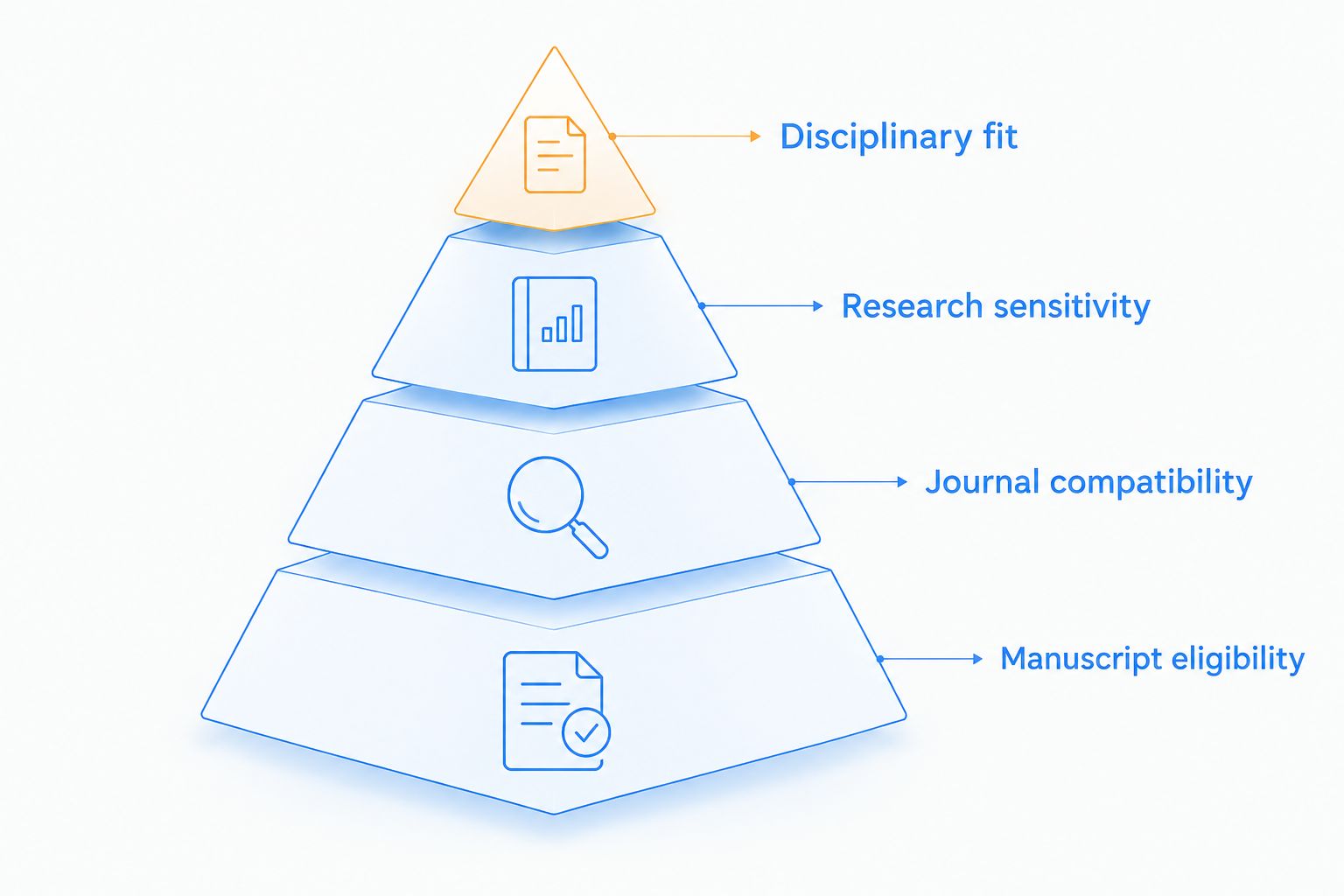
Use these criteria before comparing platforms. For your 2026 submission, check the current requirements rather than relying on a colleague's earlier experience.
- Disciplinary fit: Does the server organize manuscripts in subjects your intended readers follow?
- Manuscript eligibility: Does it accept your article type, research area, and stage of completion?
- Screening transparency: Can you distinguish submission checks from formal journal peer review?
- Version management: Can readers identify revisions and connect the manuscript with its published version?
- Journal compatibility: Does your intended journal accept preprints, and what disclosure does it require?
- Research sensitivity: Have you addressed consent, confidentiality, intellectual property, and potentially harmful interpretations?
Choose the server your intended readers recognize, not the server with the broadest subject list. Journal compatibility and ethical suitability remain separate checks: a strong audience match does not override either.
Best preprint servers at a glance
These recommendations distinguish use cases, not scientific quality. None of the servers below replaces journal peer review.
| Rank and server | Best for | Standout feature | Key limitation |
|---|---|---|---|
| 1. arXiv | Physics, mathematics, and computer science | Subject-based research archive with versioned manuscripts | Subject coverage and submission requirements do not fit every discipline |
| 2. bioRxiv | Life-science research | Biology-focused preprint discovery | Not the appropriate default for clinical research |
| 3. medRxiv | Clinical and health research | Health-research focus with submission screening | Unreviewed findings require careful public interpretation |
| 4. ChemRxiv | Chemistry research | Chemistry-focused manuscript sharing | Less suitable when chemistry is peripheral to the paper |
| 5. SSRN | Economics, law, and related social sciences | Subject networks for working papers and research manuscripts | Research formats and review status vary across submissions |
| 6. Research Square | Multidisciplinary manuscripts | Broad subject coverage and preprint posting | Broad coverage does not guarantee a specialist readership |
1. arXiv: best preprint server for quantitative disciplines
arXiv hosts research manuscripts across fields including physics, mathematics, and computer science. Its subject categories help you place a paper within a recognizable research community, while manuscript versions preserve the progression of the work.
For a paper squarely within those disciplines, arXiv is the default starting point in this guide. Check the relevant category and submission requirements before preparing your upload; some submissions involve endorsement requirements.
arXiv pros:
- Subject categories support discipline-specific discovery.
- Versioned records distinguish revisions from earlier manuscripts.
- Coverage includes several connected quantitative research fields.
arXiv cons:
- The category structure does not accommodate every research discipline.
- Submission and endorsement requirements need attention before posting.
Best for: Researchers whose primary readership works in physics, mathematics, computer science, or another supported quantitative field.
Do not select arXiv simply because collaborators recognize its name. A manuscript with no clear category fit belongs elsewhere, and an interdisciplinary paper needs a category that reflects its central contribution.
Verdict: Choose arXiv for a clear quantitative-discipline fit; skip it when the subject match is forced.
2. bioRxiv: best preprint server for life sciences
bioRxiv focuses on biological research manuscripts shared before journal peer review. Its subject organization makes it a relevant choice when your intended readers are life scientists evaluating experimental findings, methods, or biological mechanisms.
The important boundary is between biological research and clinical research. A paper about patient outcomes requires a different eligibility assessment from a laboratory study, even when both concern the same disease.
bioRxiv pros:
- Biology-focused categories keep the manuscript near relevant work.
- Public manuscripts give colleagues material to discuss before journal publication.
- Revised versions let authors update the research record.
bioRxiv cons:
- Clinical research is not its default use case.
- Posting does not establish the validity of methods or conclusions.
Best for: Life-science researchers sharing eligible biological research rather than choosing a server for patient-focused clinical findings.
Keep the abstract faithful to the evidence. If the work uses a model organism or laboratory system, do not turn those findings into claims about clinical effectiveness in your outreach.
Verdict: Choose bioRxiv for biological research; use a clinical eligibility check for patient-focused work.
3. medRxiv: best preprint server for clinical research
medRxiv hosts preprints in medical, clinical, and related health research. Its screening process is distinct from journal peer review: an accepted posting remains an unreviewed research manuscript.
For clinical researchers, selecting the server is only part of the decision. Consent, identifying information, study registration where applicable, and the risk of misleading public interpretation deserve attention before submission.
medRxiv pros:
- The health-research focus provides a clear disciplinary context.
- Submission screening addresses requirements specific to medical research.
- Versioned manuscripts support updates as the work develops.
medRxiv cons:
- Screening does not establish clinical reliability.
- Public discussion can detach a finding from its limitations and unreviewed status.
Best for: Researchers sharing eligible clinical or health research with appropriate ethical safeguards.
Write outreach that states the study design and limitations. An association is not proof of causation, and an unreviewed clinical result is not a treatment recommendation.
Verdict: Choose medRxiv for eligible clinical research; hold submission until ethical and communication concerns are resolved.
4. ChemRxiv: best preprint server for chemistry
ChemRxiv provides a chemistry-focused home for preprints. It fits manuscripts whose main contribution concerns chemical research, including work that intersects with materials science or other neighboring disciplines.
The deciding factor is the paper's central question. A chemistry method with biological applications is different from a biological study that merely uses an established chemical technique.
ChemRxiv pros:
- Chemistry-focused coverage supports subject-relevant discovery.
- Preprint records give researchers a public manuscript to share.
- Revision support helps readers distinguish updated work.
ChemRxiv cons:
- Chemistry-adjacent work still needs a clear subject fit.
- A public manuscript does not establish independent validation of experimental results.
Best for: Researchers whose principal contribution is chemical, even when the application crosses disciplinary boundaries.
Ask a colleague outside your immediate group to describe the paper's contribution. If that description centers on chemistry, ChemRxiv deserves consideration; if chemistry is incidental, prioritize the other discipline's readers.
Verdict: Choose ChemRxiv for chemistry-led research; skip it when chemistry is only a supporting technique.
5. SSRN: best preprint server for economics and legal scholarship
SSRN distributes working papers and research manuscripts through subject-focused networks. It is particularly relevant to economics, law, business, and related social-science communities, where working-paper circulation forms part of scholarly discussion.
Treat the individual record carefully. A working paper, a revised manuscript, and a journal-published article represent different stages, and readers need to understand which version you are sharing.
SSRN pros:
- Subject networks support discovery within relevant research areas.
- Working-paper distribution fits economics and legal scholarship.
- Public records provide a destination for manuscript sharing.
SSRN cons:
- Document types and review status vary across records.
- A broad subject network is not a substitute for identifying your specific readers.
Best for: Researchers circulating economics, legal, business, or related social-science working papers.
Make the manuscript's status explicit in outreach. Do not present a working paper as a peer-reviewed journal article, and update the research record when the publication status changes.
Verdict: Choose SSRN for working-paper communities in economics and law; check disciplinary conventions for other fields.
6. Research Square: best preprint server for multidisciplinary coverage
Research Square offers preprint posting across multiple research disciplines. It is a useful candidate when your manuscript does not fit the specialist servers above or when its interdisciplinary scope calls for broader coverage.
Broad eligibility and useful readership are different things. After confirming that the manuscript fits, identify how colleagues in your particular field will discover and interpret the record.
Research Square pros:
- Multidisciplinary coverage accommodates a wider range of subjects.
- Public preprint records provide a shareable manuscript destination.
- Revised versions support an evolving research record.
Research Square cons:
- Broad coverage alone does not establish specialist audience fit.
- Submission screening remains separate from formal journal peer review.
Best for: Researchers with multidisciplinary manuscripts or subjects not well served by the specialist options listed here.
For your 2026 submission, check the current posting route and requirements directly. Keep the decision focused on manuscript suitability rather than assuming that any connection with a publishing workflow changes the paper's review status.
Verdict: Choose Research Square when multidisciplinary coverage fits; hold if your specialist community expects another venue.
How these preprint servers were ranked
The ranking prioritizes disciplinary fit, manuscript eligibility, transparent review status, and revision handling. arXiv leads for the quantitative disciplines named above, not for every researcher; each subsequent recommendation owns a different audience or manuscript use case.
This is a fit-based guide for 2026, not a performance test or citation forecast. A platform's inclusion does not establish that posting there produces more citations than posting elsewhere.
Which preprint server should you choose?
Start with your paper's main discipline. Choose arXiv for supported quantitative fields, bioRxiv for biological research, medRxiv for clinical research, ChemRxiv for chemistry, and SSRN for economics or legal working papers. Consider Research Square when broader coverage better matches the manuscript.
Before posting, agree on the choice with your coauthors and check the intended journal's policy. Confirm that you have permission to share every figure, dataset description, and piece of third-party material included in the manuscript.
For your 2026 outreach plan, write a 100-word summary describing the question, main finding, and central limitation. Identify 3 reader groups that can use the work, then schedule a review after 30 days to assess relevant responses rather than counting exposure alone. These are planning recommendations, not platform requirements or predicted results.
When published-paper promotion makes sense
A server supplies a manuscript record; a promotion service helps communicate published research to selected audiences. Paperspotlight's research promotion service fits researchers who want expert-led outreach for a published paper. It does not replace preprint hosting, peer review, or the research itself.
Paperspotlight brings a PhD-founded perspective and article analysis before promotion. Its approach includes expert-led targeting of relevant researchers and scientific testing of outreach approaches across research areas and career stages; that method is not evidence of a guaranteed citation outcome.
Paperspotlight research promotion advantages: Article analysis, targeted research promotion, and social media outreach address communication work beyond hosting.
Paperspotlight research promotion limitations: The service focuses on published papers, and outreach cannot require another researcher to cite your work.
Best for: Researchers considering a promotion plan after publication. Register, choose a plan, and submit the article only after deciding what readership you want to reach.
FAQ
What's the best preprint server for an early-career researcher?
The best preprint server is the one that fits your discipline, manuscript type, and intended journal's policy. Choose arXiv for supported quantitative fields, bioRxiv for biology, or medRxiv for eligible clinical research rather than selecting by name recognition alone.
Is arXiv better than bioRxiv?
arXiv is better suited to supported quantitative disciplines, while bioRxiv is better suited to biological research. Choose by the manuscript's central contribution and intended readers, not by treating either server as universally better.
Should I choose bioRxiv or medRxiv for medical research?
Choose according to whether the manuscript is biological research or clinical and health research. Check each server's current eligibility requirements, especially for patient-focused studies, before submitting.
Does posting a preprint count as peer review?
No, posting a preprint does not count as formal journal peer review. Submission screening checks eligibility and other posting requirements without establishing that the conclusions are scientifically valid.
Can I submit a preprint to a journal afterward?
You can submit a preprint to a journal that permits it under its current policy. Check the policy before posting and disclose the preprint as required during journal submission.
Will a preprint guarantee more citations?
No, a preprint does not guarantee more citations. Public access makes a manuscript shareable, but citations depend on whether other researchers find the work relevant and use it in their scholarship.
What should I check before posting a preprint in 2026?
Check manuscript eligibility, journal policy, coauthor agreement, permissions, and ethical requirements before posting in 2026. Also make the unreviewed status and material limitations clear in public outreach.
Should I promote the preprint or the published article?
Promote the version that accurately reflects the research's current publication status. Before journal publication, identify the manuscript as a preprint; after publication, direct readers to the published record and distinguish it from earlier versions.
One last thing
A shareable record is not an outreach message. Keep the manuscript title intact, but explain to each audience why the question matters to its work. For a 2026 promotion plan, that distinction is more useful than reposting the same abstract everywhere.