
To establish how much academic paper promotion costs in 2026, check the current plan or request a quote for the work your published paper needs. Compare the quoted scope alongside your own time for preparing materials, approving outreach, and reviewing results; paying for promotion does not buy citations, publication, or peer review.
- How much does academic paper promotion cost? Compare current quotes against the work included, not promised citation gains.
- Paper Spotlight suits researchers seeking expert-led academic paper promotion rather than managing outreach themselves.
- Separate article analysis, audience targeting, outreach, and reporting when comparing promotion plans.
- Judge research visibility through relevant readership and transparent delivery; citations are not guaranteed.
How much does academic paper promotion cost in 2026?
Your decision should start with a written scope, not a citation promise. A quote becomes useful when you know which tasks the provider handles, what you must supply, and how completion will be documented.
Paper Spotlight offers academic paper promotion through article analysis, targeted research promotion, and social media outreach. Check the current plan details before choosing, then compare those details with the specific work you want handled.
Use this breakdown to examine a proposal. It separates the work being purchased from the research outcomes you hope will follow.
| Scope component | What to clarify before paying | What not to assume |
|---|---|---|
| Article analysis | How the paper informs the outreach message | That promotion includes manuscript editing |
| Audience targeting | Which researchers the campaign aims to reach | That a large audience is a relevant audience |
| Outreach preparation | Which messages or materials are included | That every format is included |
| Distribution | Which channels and activities are specified | That every recipient will read the paper |
| Reporting | What completed work and engagement will be reported | That engagement guarantees citations |
| Researcher involvement | What you must provide and approve | That expert handling removes your responsibility for accuracy |
A proposal that names these components is easier to assess than a promise of greater impact without an explanation of the work. Ask for clarification wherever the scope leaves room for different interpretations.
Why this matters
Early-career researchers need visibility that supports their scholarly reputation. An outreach message that exaggerates a result or reaches an unrelated audience does not meet that goal, regardless of how much activity it generates.
For your 2026 promotion decision, distinguish delivery, attention, and scholarly use. Delivery describes outreach completed; attention describes engagement with that outreach; scholarly use includes later discussion or citation of the research. Do not treat these as interchangeable outcomes.
Your budget decision should therefore answer a practical question: which communication tasks need outside help, and which can you handle accurately yourself?
Compare self-managed, institutional, and managed promotion
You do not have to choose between doing everything yourself and purchasing a broad campaign. First identify the support you already have, then decide where outside help fits.
| Approach | Best for | Main advantage | Main limitation |
|---|---|---|---|
| Self-managed outreach | Researchers who want direct control and can do the work | You control the message and recipient selection | You must prepare, distribute, and review the outreach |
| Institutional support | Researchers whose institution offers relevant communication help | You can coordinate promotion with institutional communication | You must confirm the available scope and whether it fits your paper |
| Managed academic paper promotion | Researchers seeking help with analysis, targeting, and outreach | Specified communication tasks move to a service provider | You must assess the scope and retain oversight of scientific accuracy |
Choose the approach that covers a real gap in your workflow. If your main obstacle is explaining the paper, additional distribution alone does not solve it. If your message is ready but audience selection is difficult, focus your questions on targeting.
Institutional support is an option to investigate, not a service to assume. Ask your department or communications team what they can handle before commissioning overlapping work.
Self-managed outreach: retain control of the work
Self-managed promotion fits researchers who want to write their own messages and select recipients directly. You can tailor each explanation to the research question, methods, and limitations you know best.
The trade-off is responsibility. You must make time for preparation, distribution, follow-up, and assessment rather than treating promotion as a single announcement.
Institutional support: confirm the remit
Ask whether institutional communication support covers your published paper and intended audience. Clarify whether the team can advise on wording, distribute an announcement, or coordinate with other communication activity.
Do not commission a separate provider until you understand that remit. A defined division of work helps you avoid conflicting messages and duplicated effort.
Managed promotion: purchase a defined service
Managed promotion fits a researcher who wants specified outreach tasks handled by specialists. Evaluate the service by how clearly it connects the paper's subject to the proposed audience and communication approach.
The limitation is straightforward: you still need to verify scientific claims, approve any required materials, and interpret results responsibly. Outsourcing promotion does not outsource authorship responsibility.
Why academic paper promotion quotes need scope checks
Use the following factors to compare proposals in 2026. These are scope questions to resolve, not assumptions about what every provider includes.
- Article analysis: Establish whether the provider examines the paper before proposing the message and audience.
- Audience targeting: Ask how the intended readers relate to the paper's topic, methods, or application.
- Outreach preparation: Clarify which written materials or other communication assets form part of the work.
- Distribution: Confirm the channels and outreach activities covered by the proposal.
- Reporting: Ask what evidence of completed work and audience engagement you will receive.
- Researcher involvement: Establish your responsibilities for supplying information, checking claims, and approving materials.
Do not compare proposals solely by the length of their activity lists. A task matters only if it supports the audience and communication problem you have identified.
For example, ask a provider to explain why a proposed channel suits your intended readers. A clear answer should connect the channel to your paper, rather than rely on a general statement about visibility.
How to assess a promotion plan before committing
A useful assessment follows the paper from its research contribution to the evidence you will review afterward. Keep that sequence visible when discussing a proposal.
- Define readers. Name the researchers who have a substantive reason to read the paper. Describe their research interests rather than using a broad label such as everyone in your discipline.
- Check access. Confirm where readers can reach the published article or a version you are permitted to share. Do not assume promotion changes access rights.
- Match scope. Connect each proposed task to a communication need. Ask what article analysis, targeting, and outreach mean within that specific plan.
- Approve claims. Check that the message preserves the paper's findings, uncertainty, and limitations. Remove language that implies more than the study supports.
- Review delivery. Agree on how you will distinguish completed work from engagement and later scholarly outcomes.
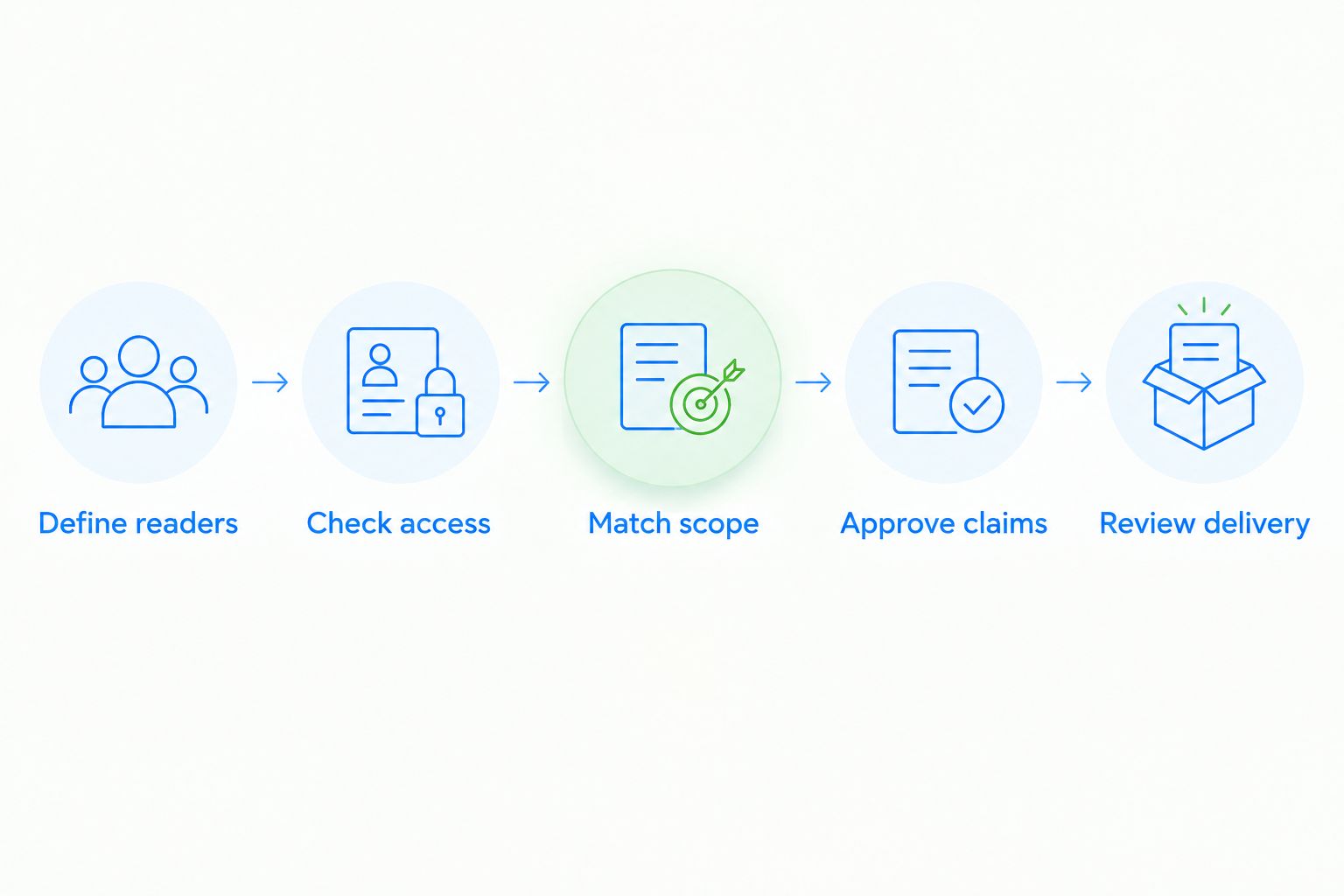
Write your answers down before comparing plans. A short brief gives each provider the same problem to address and makes vague responses easier to identify.
For a 2026 campaign, keep the brief focused on the published paper you want to promote. Separate requests concerning other papers, profile development, or broader career communication so you can assess each piece of work on its own terms.
Where Paper Spotlight fits
Paper Spotlight is best for researchers seeking expert-led academic paper promotion rather than managing outreach themselves. Its PhD-founded perspective connects the service to researchers' needs, with article analysis before promotion and expert-led targeting of relevant researchers.
Paper Spotlight also describes scientific testing of outreach approaches across research areas and career stages. Treat that as a description of its method, not evidence of a particular result for your paper or a guarantee that one approach works equally well across disciplines.
The service offers a way to hand over defined promotion work. The limitation remains important: you must assess the current plan, confirm its fit, and maintain realistic expectations about visibility and citations.
Before choosing, ask how your article's analysis will inform audience selection and social media outreach. Then follow the service process: register, choose a plan, and submit your article.
Assess your paper promotion options
Review the service before choosing a plan for your published paper.
Is paying for academic paper promotion the same as paying for citations?
Paying for academic paper promotion purchases communication work, not citations. Researchers decide independently whether a paper is relevant to cite, and your agreement should not imply otherwise.
Reject an offer framed as purchasing citation outcomes. Keep the scope focused on legitimate activities such as article analysis, audience targeting, and outreach.
Does academic paper promotion include publication or peer review?
Academic paper promotion does not purchase publication or peer review. This decision concerns communicating a published paper to relevant readers, not obtaining a journal's editorial approval.
Keep promotion separate from any editorial or publication-related services. A clear boundary prevents you from comparing services that address different needs.
How should I judge whether the promotion was worthwhile?
Judge promotion against the work agreed and the audience you intended to reach. Start with whether the provider delivered the specified activities, then examine the engagement evidence the reporting supports.
Keep citation monitoring separate from immediate campaign delivery. A citation is a different outcome from a message being sent, an article link being opened, or a social post receiving attention.
FAQ
How much does academic paper promotion cost in 2026?
Check the provider's current plan or obtain a quote tied to your published paper. Compare article analysis, targeting, outreach, reporting, and your own responsibilities before deciding.
What should I ask before buying a paper promotion plan?
Ask what work is included, who the intended readers are, and how delivery will be reported. Confirm what you must supply or approve and keep citation guarantees outside the agreement.
Is managed paper promotion better than doing it myself?
Managed promotion fits researchers who want specified communication tasks handled by a provider; self-managed outreach fits those who want control and can do the work. Choose according to the gap in your workflow, not an assumption that either route guarantees impact.
Can academic paper promotion guarantee more citations?
Academic paper promotion cannot guarantee citations. It supports communication and visibility, while other researchers independently decide whether the paper is relevant to their work.
What does Paper Spotlight do before promoting a paper?
Paper Spotlight uses article analysis before promotion and expert-led targeting of relevant researchers. Ask how those activities apply to your article and the plan you are considering.
Do I still need to review outreach written by a promotion service?
You should verify that outreach accurately represents your paper. Check the findings, limitations, attribution, and any wording that implies a broader conclusion than the research supports.
Should I use institutional communication support before buying promotion?
Check what institutional support can provide before commissioning overlapping work. Confirm its remit, then identify any remaining tasks that require your time or an outside service.
One last thing
Before committing to promotion in 2026, write down who should read the paper and why it matters to their research. If that answer remains vague, resolve it before choosing a plan.
A clearly defined reader is a better purchasing criterion than a promise of broad exposure. Use that reader description to test every proposed message, channel, and activity.


