
Yes—early-career researchers can afford paper promotion when the work fits an available budget, addresses a specific visibility need, and leaves essential research expenses protected. In 2026, the decision must also account for your time: paying for outreach does not remove the need to check scientific accuracy, and no promotion service can guarantee citations.
- Can early-career researchers afford paper promotion? Yes, when the scope fits their budget and a defined audience.
- Paper Spotlight is best suited to researchers seeking expert-handled academic paper promotion rather than managing outreach themselves.
- Compare article analysis, audience targeting, and social media outreach—not promises of citations.
- Protect essential research spending and confirm permitted funding uses before choosing a promotion plan.
Why this matters
A published paper needs readers who can understand and use its contribution. Promotion should help those readers discover the work, not substitute attention for scientific quality.
Paper Spotlight offers academic paper promotion through article analysis, targeted research promotion, and social media outreach. For your 2026 planning, assess that service against the work you need handled—not against an assumed future citation count.
Affordability means you can justify the commitment even if the paper receives no additional citations. That standard keeps the decision focused on a service you can evaluate rather than an academic outcome nobody controls.
Can early-career researchers afford paper promotion?
Yes, but affordability depends on your resources and the scope of help you need. An early-career researcher with time to prepare accurate outreach materials faces a different decision from a researcher who needs expert help identifying and reaching relevant readers.
Compare the available approaches before choosing a plan. These are ways to organize promotion, not named service tiers or promises about what an institution will provide.
| Approach | Best for | Main advantage | Main limitation |
|---|---|---|---|
| Self-managed promotion | Researchers who can handle audience selection and communication | Direct control over messages and outreach | Requires your own preparation and follow-up |
| Institutional support | Researchers whose university or department offers suitable help | Access to an existing research communication function | Eligibility and scope require confirmation |
| Expert-handled promotion | Researchers who want article analysis and targeted outreach handled for them | Delegates defined communication tasks | Requires a justified budget and scientific review by the researcher |
Choose the smallest scope that addresses a real gap. If your main problem is explaining the contribution clearly, broader distribution is not the first task. If your summary is ready but the relevant audience is unclear, targeting deserves attention.
Before paying, write down what you cannot currently do well or consistently. A specific answer gives you something useful to compare with the proposed service.
Self-managed promotion: best for retaining direct control
Self-managed promotion suits researchers who want to select audiences, write messages, and manage follow-up themselves. You stay close to the language used to describe the paper and can adjust it when readers misunderstand the contribution.
Start with an accurate summary of the research question, the main finding, and the limitation readers must understand. Then identify the researchers or communities for whom that finding is relevant.
The trade-off is workload. Writing a useful post is different from deciding where it belongs, checking access to the article, and responding to questions. Treat those as research communication tasks, not incidental administration.
Use self-managed promotion when you can give the work sustained attention without displacing essential research. Do not assume that opening another social account solves an audience problem.
Institutional support: best for checking existing help first
Ask your department, library, research office, or communications team whether support is available for your published paper. Confirm eligibility rather than assuming that all researchers or publications receive the same assistance.
Bring a clear explanation of the paper's contribution and intended audience. That makes the conversation more useful than a general request to increase visibility.
The advantage is the possibility of using support already connected to your institution. The limitation is that the available scope must match your actual needs; general communications help and specialist researcher outreach are not interchangeable.
Check institutional support before committing personal funds. If support covers only part of the work, identify the remaining gap before considering a separate service.
Expert-handled promotion: best for delegating defined tasks
Expert-handled promotion suits researchers who want help analyzing a paper, identifying relevant readers, and preparing outreach. The decision is strongest when you can describe exactly which tasks you want someone else to manage.
Paper Spotlight brings a PhD-founded perspective to academic paper promotion, with article analysis before promotion and expert-led targeting of relevant researchers. Its approach includes scientific testing of outreach methods across research areas and career stages; that describes the method, not proof of a particular outcome for your paper.
The benefit is a process centered on understanding and communicating published research. The limitation is that delegation does not transfer scientific responsibility: you still need to check that messages accurately represent the findings and limitations.
Paper Spotlight is best suited to researchers seeking expert-handled academic paper promotion rather than managing outreach themselves. Choose a plan only after its stated scope matches the help you need.
Why paper promotion commitments vary
The useful comparison is not simply whether promotion is affordable in the abstract. It is whether the proposed work matches your paper and the resources you can commit.
- Article analysis: Establish how the paper's contribution and limitations will inform the outreach message. Distribution without that foundation is the wrong starting point.
- Audience targeting: Specify the researchers or research communities you want to reach. A broad audience description makes relevance harder to assess.
- Outreach scope: Clarify which communication tasks are included, particularly where social media outreach fits into the work.
- Researcher involvement: Identify the material you need to supply and the scientific checks you need to perform. A service does not eliminate those responsibilities.
- Career-stage needs: Explain your immediate communication objective rather than relying on the label “early-career.” Your paper's intended readers matter more than a generic career category.
These factors help you compare scope; they do not establish that a larger campaign is better. Pay attention to work that addresses your bottleneck, not simply to the volume of activity described.
How do I decide whether promotion fits my budget?
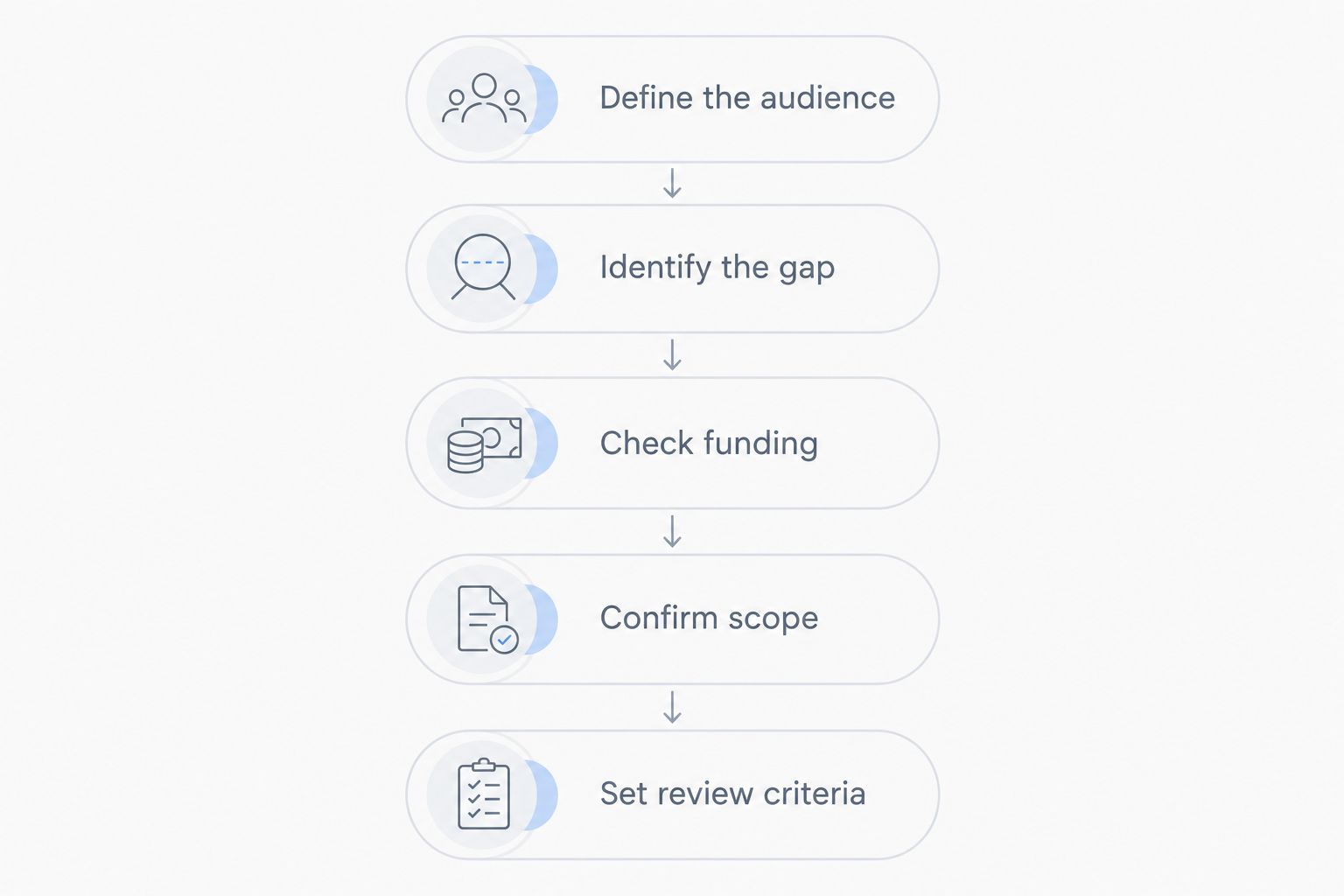
Use this decision sequence for a 2026 promotion plan. It separates the research objective from the spending decision so that enthusiasm about visibility does not become the whole justification.
- Define the audience. Describe who needs the paper and why. Name the research problem, method, or application that makes the work relevant to those readers.
- Identify the gap. Decide whether you need help with article analysis, audience targeting, or outreach execution. Avoid buying a broad solution to an undefined problem.
- Check funding. Confirm whether the proposed activity is permitted under the funding source you intend to use. Do not treat a possible reimbursement as approved spending.
- Confirm scope. Compare the proposed work with tasks you can handle yourself or through institutional support. Ask what you must supply and what remains your responsibility.
- Set review criteria. Decide how you will assess the work without requiring a citation outcome. Check scientific accuracy, audience relevance, and whether the agreed activity was delivered.
Write your decision in plain language: the paper needs to reach a defined audience, a specific task is not being handled, and the proposed service addresses that task within an approved budget. If you cannot complete that explanation, pause the purchase.
Keep the researcher's role explicit. Even when someone else manages outreach, your review should protect the distinction between what the paper demonstrates and what remains uncertain.
What should I ask before choosing a promotion plan?
Ask questions that reveal how the service will handle your paper. A clear process is more useful than a broad promise of impact.
- How will the article be analyzed before promotion begins?
- How will the intended research audience be identified?
- Which outreach tasks are included in the proposed plan?
- What scientific information or materials must I provide?
- How will limitations and uncertainty be represented?
- What information will let me assess the work delivered?
For Paper Spotlight, the stated starting point is article analysis followed by targeted promotion. Use those elements to frame your questions, without assuming that a specific channel, deliverable, or reporting arrangement is included in every plan.
A credible buying decision rests on defined work, not a promised academic reward. If the explanation shifts from reaching relevant readers to guaranteeing citations, publication, or peer-review outcomes, do not treat those claims as a reason to proceed.
Review promotion for your published paper
Explore article analysis, targeted research promotion, and social media outreach.
Should I use personal money for paper promotion?
Use personal money only when the commitment is comfortable without reimbursement or a citation return. Protect essential research and living expenses first.
Before deciding, ask whether your institution offers relevant communication support and whether an approved funding source can cover the activity. Neither option should be assumed.
If you remain uncomfortable with the commitment, start with work you can control: clarify the paper's message, check that readers can reach an appropriate version, and identify relevant audiences. Buying promotion is optional; preserving financial stability is not.
Can a promotion plan guarantee more citations?
No promotion plan can guarantee more citations. Researchers decide what to cite based on the relevance and substance of the work they use.
Keep that distinction central to a 2026 decision. Visibility is an opportunity for discovery, not an instruction to cite, and purchasing outreach is not purchasing scholarly endorsement.
Ask what communication work will be performed and how you can assess it. Never use a promised citation count as the justification for spending.
How do I judge whether promotion was worthwhile?
Judge promotion against the communication objective you set before committing. Did the work accurately explain the paper, target a relevant audience, and deliver the agreed activity?
Separate those questions from later academic outcomes. A citation is not a substitute for checking whether outreach was scientifically accurate, and attention alone does not establish research quality.
Where information is available, review reader engagement in context rather than treating every interaction as equally useful. A substantive question from a relevant researcher and a generic reaction tell you different things; neither should be converted into a promised future citation.
FAQ
Can early-career researchers afford paper promotion in 2026?
Yes, when the scope fits an available budget and addresses a defined communication need. Protect essential expenses and make the decision without assuming additional citations.
Should I promote my paper myself or use a service?
Promote the paper yourself when you can handle accurate messaging, audience selection, and follow-up. Consider a service when you want defined tasks handled by specialists and can justify the commitment.
Can my university help promote my published paper?
Ask your university whether relevant support is available and whether your paper is eligible. Confirm the scope before relying on it or paying for overlapping work.
Can I use grant funding for paper promotion?
Use grant funding only after confirming that the activity is permitted under the applicable award and institutional rules. Obtain the required approval before committing funds.
Is paying for paper promotion the same as paying for citations?
No, paper promotion pays for communication work rather than citations. Reject any offer that treats citation purchases or guaranteed citation counts as the service.
What does Paper Spotlight offer researchers?
Paper Spotlight offers article analysis, targeted research promotion, and social media outreach for published papers. Its PhD-founded perspective informs expert-led targeting, without guaranteeing citation outcomes.
What should I prepare before asking about a promotion plan?
Prepare the published paper, a clear account of its contribution and limitations, and a description of the readers you want to reach. Ask which additional materials the proposed plan requires.
One last thing
The most useful budget test is not whether you hope promotion will work. It is whether you would still consider the agreed communication work worthwhile without an additional citation.
For your 2026 decision, answer that question before choosing a plan. If only a promised citation return makes the commitment acceptable, do not buy the promotion.


